How San Diego Basketball Club Teams Build Winning Habits
Winning games gets attention. Winning habits build programs.
That distinction matters in youth basketball, especially in a place like San Diego, where talent runs deep, gyms stay busy year-round, and families often have more choices than they can reasonably sort through. A club team can look sharp for a weekend, press hard, ride its best two players, and collect a few medals. That does not always mean the team is building anything durable. The stronger Basketball Club Teams San Diego families gravitate toward usually care about something more stable. They want players who improve across a full season, play with discipline under stress, and learn standards that still hold up when the score is close.
The teams that consistently win in meaningful settings tend to share the same underlying patterns. They are not relying on hype or a temporary hot streak. They train habits that show up every day, in ordinary moments that most spectators miss. A clean closeout. A sharp jump stop. A box-out completed when nobody is watching the rebound. A huddle where players actually listen. A late-game possession where spacing holds because it has been reinforced a hundred times in practice.
Those habits are rarely glamorous. They are often repetitive. They can feel small until you watch enough basketball to see how often games turn on them.
Winning starts before the first tournament
By the time a club team enters a tournament, many of the most important outcomes have already been shaped. Not decided, but shaped. The habits established in the first few weeks of training often become the team’s identity by midseason.
Good coaches in San Diego know this. They do not wait for mistakes to pile up before introducing standards. They establish language early. Players hear the same cues repeatedly, but not mindlessly. Sprint the floor every possession. Land balanced. Talk early on defense, not after the screen hits. Make the simple pass on time. Finish the drill even when tired. Those details eventually become cultural shorthand. A player hears one phrase and understands the whole correction.
This is one reason experienced club coaches spend so much time on transitions and shell work, even when players would rather scrimmage. They are building responses that must hold under fatigue and noise. During a tight Sunday bracket game, nobody has time for a lecture. A player falls back on training. If training has been casual, performance will be casual. If training has had standards, the body usually finds them before the mind fully catches up.
I have seen talented teams lose because they treated early-season practices like a warm-up for competition rather than the place where competition is won. I have also seen less naturally gifted groups become difficult to beat by January because they learned how to defend without fouling, communicate through switches, and value each possession. Talent can win stretches. Habits win months.
The gym culture tells you almost everything
Parents often judge club programs by visible outcomes, wins, social media clips, uniforms, tournament travel, or which high school names are attached. Those things are easy to market. Culture is harder to advertise, but much easier to feel once you step into a gym.
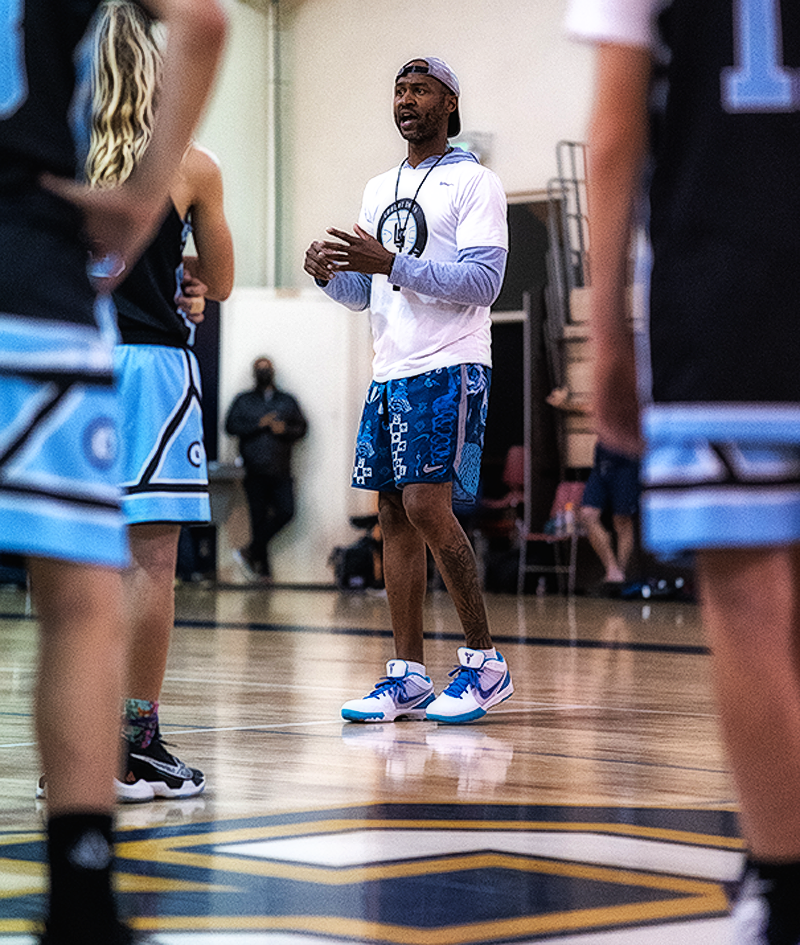
A serious team has a different sound. Players are not just loud, they are purposeful. There is communication with content. Coaches are correcting footwork, angles, timing, and effort, not just yelling generic encouragement. Drills start on time. Water breaks do not drift. Managers and assistants know the flow. Players move to stations without confusion. Even younger teams can show this kind of order if expectations are consistent.
The reverse is also true. When practice starts late, lines drag, reps are uneven, and the loudest player controls the emotional tone, the team is usually living possession to possession. In those environments, players may still improve if they are self-driven, but the group rarely develops a dependable identity.
San Diego’s club scene is competitive enough that culture becomes a separator. Many athletes are playing across school ball, skill training, strength work, and travel schedules. They do not need more chaos. They need an environment where details matter and where accountability is normal, not personal. The best coaches correct hard without humiliating. That balance is not easy. It takes experience to know when to stop practice, when to let players play through mistakes, and when a pattern needs immediate attention.
Skill work is only half the story
Every family asks about development, and rightly so. Ball handling, shooting, finishing, passing reads, and defensive technique all matter. But skill development in club basketball is often misunderstood. More drills do not automatically equal more improvement. Better transfer matters more than volume alone.
A player might look great in isolated workout clips and still struggle in five-on-five because the habits around decision-making have not been trained. Can she catch and shoot with her feet ready after sprinting from the weak side? Can he make the extra pass without holding the ball? Can a guard reject a screen when the defender cheats the angle? Can a wing relocate after a drive instead of standing and hoping for a kick-out? Those are habit questions as much as skill questions.
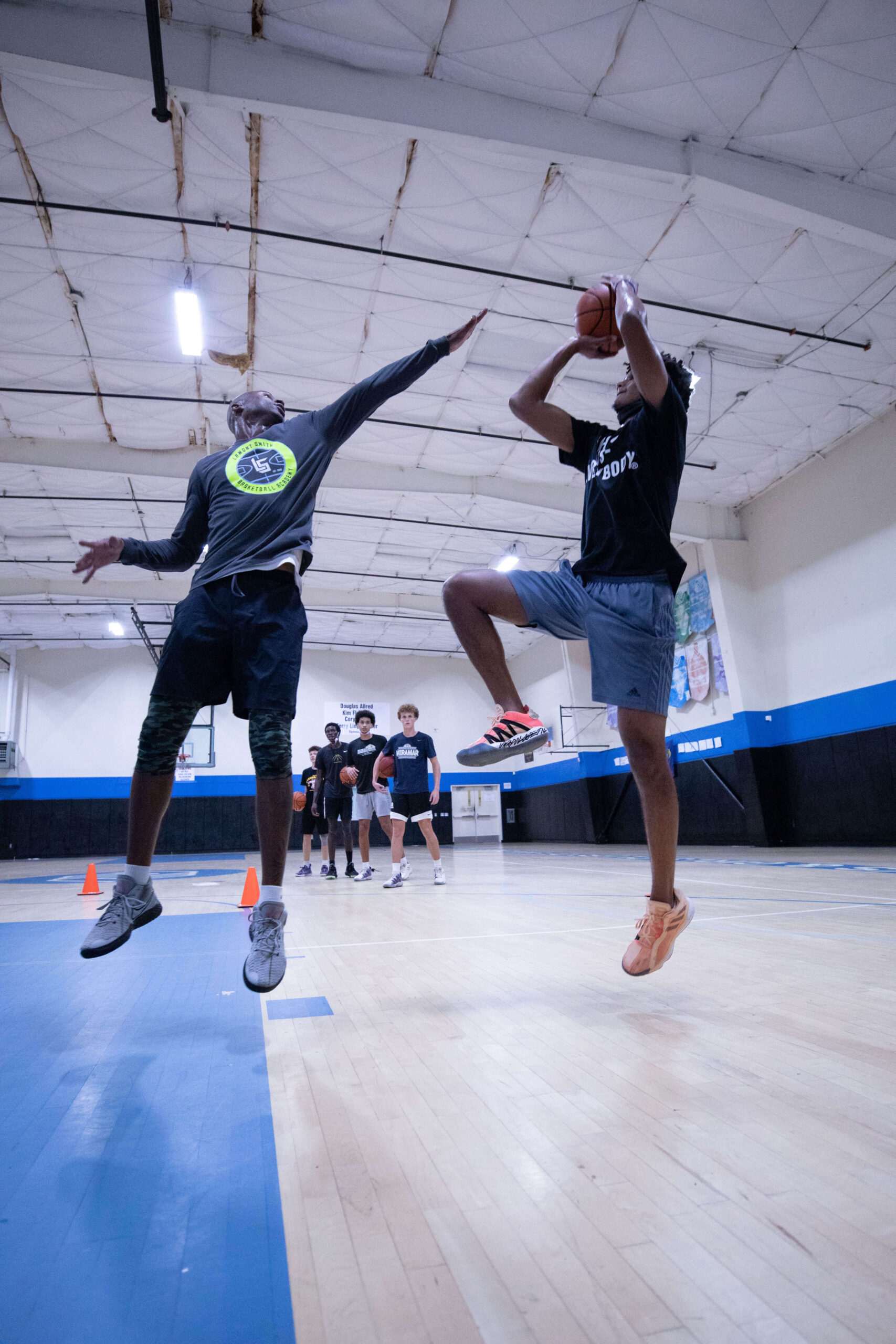
The strongest Basketball Club Teams San Diego coaches usually blend technical work with live reads. They know that polished form without game pressure only goes so far. So they create constraints. Two dribbles maximum. Score out of advantage in four seconds. No paint catches allowed on defense. Weak-hand finishing only for a segment. Those boundaries force players to connect technique to timing.
That is where confidence becomes real. Real confidence is not a speech. It is the memory of having executed something correctly dozens of times under conditions that felt uncomfortable at first. When a player says, “I knew I could make that read,” what she often means is, “I have seen this enough in practice that it felt familiar.”
Defensive habits are the clearest sign of coaching
Offense tends to get the highlights. Defense exposes habits.
A team that defends well almost always reflects coaching consistency. Not because coaches can magically create elite lateral quickness or length, but because defensive improvement responds well to standards. Stance, talk, help position, tagging cutters, closing out under control, rebounding outside your area, and recovering after a mistake are all trainable. None of them demand superstardom. They demand repetition and buy-in.
Watch a strong club team for five defensive possessions and you can usually tell what has been emphasized. Do players jump to the ball? Does the low man rotate on time? Is there urgency to first contact on the glass? Are closeouts wild and reckless, or balanced enough to contain the drive? Do players communicate matchups in transition, or point vaguely after the layup is already scored?
In youth basketball, defense often breaks down not because players are lazy, but because they are late. Late to load to the ball. Late on help. Late identifying the shooter. Late boxing out. Winning habits reduce lateness. That sounds simple, but it is one of the cleanest truths in the sport.
There is also an emotional side to defensive habits. Teams that defend well usually trust one another more. A player will pressure the ball harder if she believes help is behind her. A post will step up confidently if the weak-side rotation has been drilled enough times to feel automatic. Discipline breeds aggression. Undisciplined teams often look passive because players do not trust what is happening around them.
Good teams use routine to handle pressure
Tournament basketball creates a specific kind of stress. There are back-to-back games, unfamiliar rims, changing refereeing styles, and the emotional swings that come when a 10-point lead disappears in two minutes. Teams that have habits anchored in routine handle that better than teams built mainly on emotion.
This starts with simple things. Warm-ups matter. Huddle structure matters. Bench engagement matters. Teams that can settle themselves after a bad call or a turnover are usually the ones that have practiced emotional control before they needed it.
One coach I respect used to say that players borrow calm from structure. He was right. Young athletes do not always have mature internal regulation yet. They are learning it. A stable routine gives them something to grab onto. If every timeout has clear communication, if free throw rebounding assignments are always named, if end-of-quarter situations are rehearsed, then pressure becomes more manageable. Not easy, but manageable.
This is where club teams sometimes separate from recreational https://gregoryrkps063.zenbloomer.com/posts/top-basketball-club-teams-in-san-diego-to-watch-this-season environments. At the club level, details get tested more often. Better opponents punish sloppy spacing. Better guards attack weak closeouts. Better coaches identify who can be screened into trouble. That pressure reveals whether a team’s habits are cosmetic or foundational.
Accountability works best when players own it too
Coach-led accountability is necessary. Player-led accountability is the next level.
The healthiest club teams are not built only on adult correction. Their players begin to echo the same standards. A point guard reminds a teammate to get lower on the closeout. A wing calls out that transition defense was late because the team argued for a rebound instead of sprinting back. A veteran player pulls a younger one aside after practice and shows her where to stand on the weak side. None of that happens overnight. It grows when coaches create a climate where responsibility is shared rather than feared.
There is a fine line here. Player accountability should not turn into peer policing or constant criticism. Younger teams especially need guidance so leadership does not become sarcasm. The goal is ownership, not tension. The best team leaders I have been around ask demanding questions without making everything personal. “Where are you supposed to be on that tag?” lands better than “You always mess that up.”
This matters in San Diego club basketball because many rosters are assembled from different schools and social circles. Players do not walk in with built-in chemistry. Habits become a common language before friendships do. Shared standards can actually accelerate trust. When everyone knows what “good” looks like, feedback feels less random.
Playing time can help or hurt habit formation
Every club family cares about playing time, and with good reason. Development needs real minutes. But playing time is also one of the clearest ways coaches shape habits.
If minutes are handed out with no connection to effort, defense, communication, or reliability, players notice quickly. So do parents. Resentment grows fast in that environment because standards feel arbitrary. On the other hand, if coaches clearly reward the behaviors they say they value, the culture stabilizes.
This does not mean every minute distribution will feel fair to everyone. Club basketball is competitive. Roles differ. Matchups matter. Some players are farther along. But players can usually accept tough truths when they see consistency. A coach who says defense earns time and then leaves a talented scorer on the floor despite repeated defensive lapses has taught the whole roster that offense excuses habit failure.
I have seen second units completely reshape a team because they embraced the controllables. They sprinted into actions, defended with force, and rebounded every miss. Sometimes those players were not the most gifted. They were simply the most dependable. Dependability has enormous value in tournament settings where one soft quarter can end a weekend.
Parents influence habits more than they realize
No youth basketball conversation is complete without parents, because they help reinforce, or weaken, everything a team is trying to build.
The strongest parent cultures usually have a few traits in common. They respect gym boundaries. They let coaches coach. They talk to their children about effort, body language, and learning, not just points scored. They understand that improvement can be uneven. A player might have a stronger month statistically and still be building weaker habits, or struggle in games while making real defensive and decision-making progress.
Problems start when adults evaluate every weekend like a stock chart. One poor game becomes a crisis. One good tournament becomes proof that every issue is solved. Young players absorb that volatility. It often pushes them toward outcome obsession rather than habit focus.
That does not mean parents should stay silent about legitimate concerns. Good programs welcome thoughtful communication. But productive communication is specific and grounded. Questions about role clarity, attendance expectations, or development priorities are healthy. Sideline coaching, postgame blame, and constant comparison almost never help.
In Basketball Club Teams San Diego circles, where competition for roster spots and exposure can feel intense, parent perspective becomes even more important. The players who stay healthiest mentally are often the ones whose families can hold both truths at once: basketball matters, and it is not everything.
Habits show up in the small transitions of a game
Most games turn on a handful of mini-moments that casual viewers barely register. The better the level, the more those moments matter.
A team gives up an offensive rebound because two defenders watched the ball instead of finding a body. A good shooter is open because a help defender took one extra step into the lane out of habit. A turnover happens because the ball handler left her feet without a plan. A layup is missed because the finisher rushed instead of using the rim for protection. These are not dramatic failures. They are accumulated habit leaks.
Coaches who build winning teams spend a surprising amount of time tightening those leaks. Sometimes from the stands, it can look repetitive or picky. Why stop practice over a bad angle on a closeout? Why redo a transition rep because a player jogged the last three steps? Because games are often decided by the fifth or sixth version of those moments, when fatigue strips away concentration and only habits remain.
One of the clearest signs that a team is maturing is when those mini-moments start going its way more often. The group takes a charge late. The weak-side defender rotates without hesitation. The inbounder does not panic against pressure. None of those plays happen by accident.
The best programs balance ambition with patience
Club basketball can get rushed. Families want progress now. Coaches feel pressure to produce wins now. Players want bigger roles now. But habit building has a stubborn timeline. Certain things improve quickly, like terminology familiarity or organized transition spacing. Other things, like defensive anticipation, emotional steadiness, or consistent shot selection, can take months or years.
The best programs are ambitious without becoming frantic. They push hard while keeping perspective. A 13-year-old guard who struggles against pressure in November may become calm and surgical by spring if the environment is right. A forward who cannot defend ball screens early in the season may become trustworthy by playoff time after enough guided reps.
That patience is not passive. It is active and demanding. Coaches still correct, compete, and hold standards. They simply understand that meaningful habits need repetition across different contexts. Players have to fail with support, adjust, and try again. There is no shortcut around that.
San Diego’s basketball ecosystem offers enough competition that patient development can still be demanding. Players can see quality opponents often. They can test new habits against resistance. That is ideal, as long as the adults around them do not mistake every temporary struggle for failure.
What families should look for when evaluating a club team
If a family is trying to identify whether a team truly builds winning habits, the answers are usually visible in practice and on the bench long before a championship game.
Look at how players respond after mistakes. Do they unravel, or reset? Look at the defensive stance in the second half. Look at substitution patterns and whether role players stay engaged. Listen to the coaching language. Is it specific? Is there teaching, or only reacting? Watch whether the team values the ball late in games. Notice whether players know where to stand during dead-ball situations without needing rescue every possession.
A few practical signs stand out:
- Practice has tempo and purpose, not just activity.
- Defensive communication is expected from everyone, not a few vocal players.
- Effort habits, sprinting, rebounding, floor balance, are corrected consistently.
- Players improve in decision-making, not only individual moves.
- The team’s composure holds up when momentum shifts.
None of those guarantees a trophy. Youth sports never work that neatly. But together they usually point toward a real developmental environment, and real developmental environments tend to produce more meaningful winning over time.
Why the habit piece lasts longer than the season
Most players will not remember every tournament result in detail. They will remember how the serious teams operated. They will remember what was expected when they were tired, frustrated, or under pressure. They will remember coaches who made standards clear and teammates who held them accountable with respect.
That is part of what makes club basketball valuable when it is done well. The lessons travel. A player who learns to defend with discipline, communicate under stress, and stay ready for her role is learning more than a scheme. She is learning how preparation shapes confidence. A player who understands that consistency matters more than mood gains something that helps in school, work, and every competitive setting that follows.
That is why winning habits matter so much in the best Basketball Club Teams San Diego has to offer. The scoreboard matters, and nobody serious pretends otherwise. But the strongest programs know that results are most reliable when they grow out of standards. Habits create identity. Identity shapes performance. Performance, over enough games and enough months, becomes the kind of winning people trust.
And trust is the real marker of a strong team. Not whether it can look great for one weekend, but whether players, coaches, and families believe the same disciplined behaviors will hold up again next week, next month, and next season. That kind of confidence is earned slowly. It is built in practice, reinforced in competition, and revealed when the game gets hard.
Lamont Smith Basketball Academy
888 Clairemont Mesa Blvd Suite T-2, San Diego, CA 92123
(619) 639-8778
FAQ About Basketball Club Teams San Diego
How can a player join an LSBA club team?
Players are evaluated during practices so the coaching staff can recommend an appropriate team and development level. Families should contact the academy to confirm current openings and evaluation details.
Are club teams available for newer basketball players?
Yes. LSBA describes multiple levels, including a developmental option for newer players as well as more competitive teams for athletes with prior club experience.
What do LSBA club team practices emphasize?
Practices emphasize basketball fundamentals, team defense, structure, communication, and player development. The specific focus may vary according to the team and experience level.
Do all LSBA teams travel?
Travel expectations vary by level. Some teams focus on local competition, while advanced teams may participate in tournaments elsewhere in Southern California or beyond. Families should confirm the current schedule before enrolling.